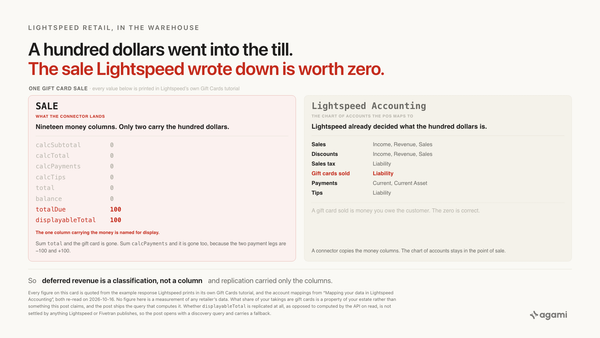
Lightspeed Totals a Gift Card Sale at Zero, Correctly
A customer hands over a hundred dollars for a gift card and Lightspeed writes the sale down as zero, on purpose. The semantic model is where your warehouse learns that is deferred revenue.
Thoughtful perspectives, practical frameworks, and expert takes on giving every team and AI assistant trusted answers from enterprise data.
A customer hands over a hundred dollars for a gift card and Lightspeed writes the sale down as zero, on purpose. The semantic model is where your warehouse learns that is deferred revenue.
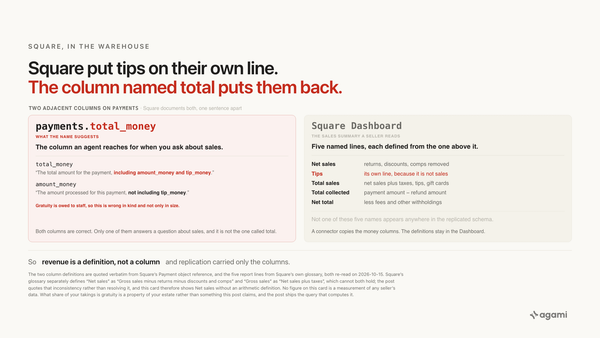
Square's report puts tips on their own line, because tips aren't sales. Replication lands fifteen money columns and none of the definitions. The semantic model is where revenue gets defined.
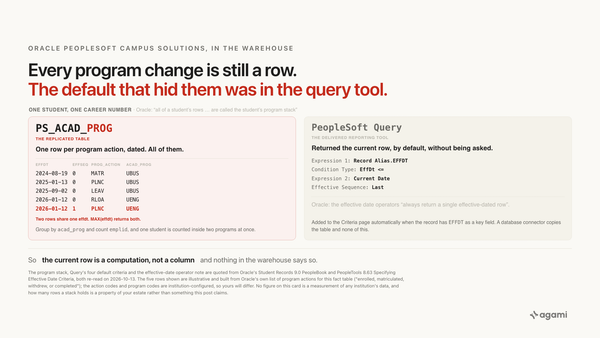
Every program change is still a row in PS_ACAD_PROG, and the tool you reported from dropped them by default. That default doesn't replicate. The semantic model is where the current row gets defined.
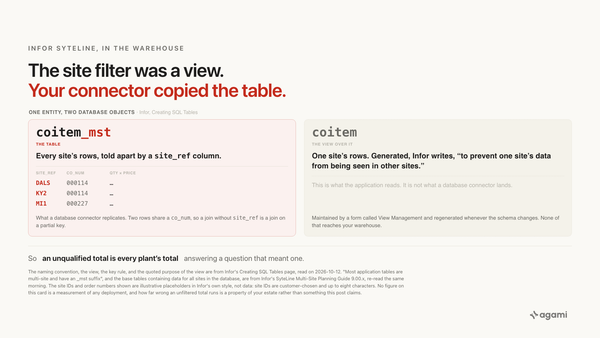
Every SyteLine table holds every site's rows. The object that filtered them to one plant was a SQL view, and your connector copied the table. The semantic model is where the site becomes a key.
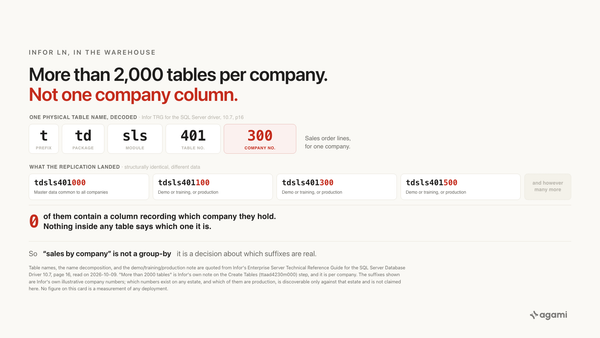
One Infor LN table lands in your warehouse as many tables, one per company, and not one of them has a company column. The semantic model is where the company becomes a column you can group by.
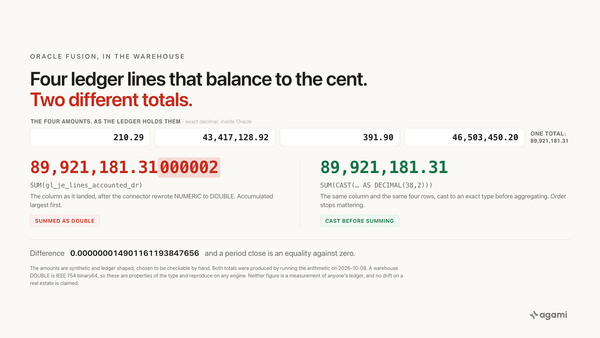
Oracle's ledger balances to the cent because the amounts are decimal. The connector lands them as floating point, and the semantic model is the only place that records they used to be exact.
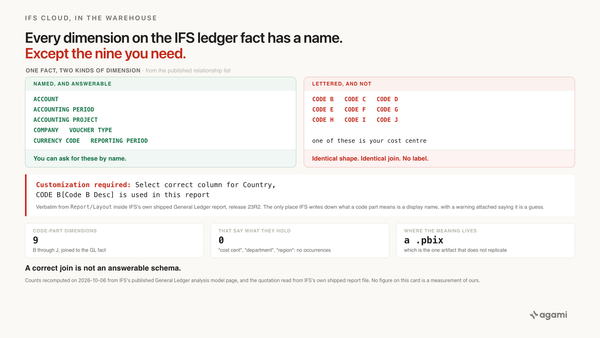
IFS ships nine ledger dimensions named B through J, and never writes down which one is the cost centre. The semantic model is where that finally gets said.
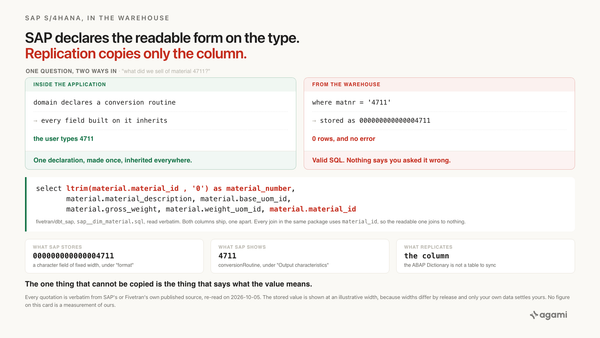
Your SAP warehouse stores material 4711 as 000000000000004711 and ships a trimmed copy beside it. Only one of the two joins to anything. The semantic model declares which.
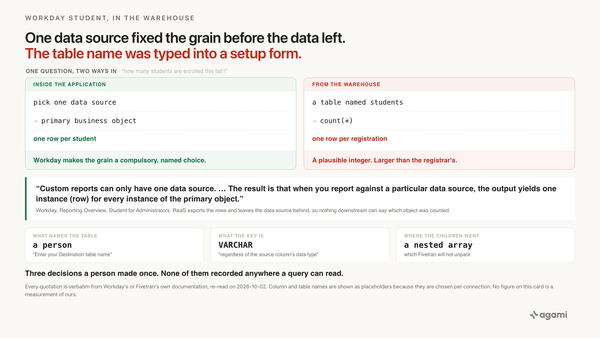
A Workday Student table is one custom report's output, at a grain Workday fixed inside the tenant. The table name was typed by hand. The semantic model is where that grain gets declared.
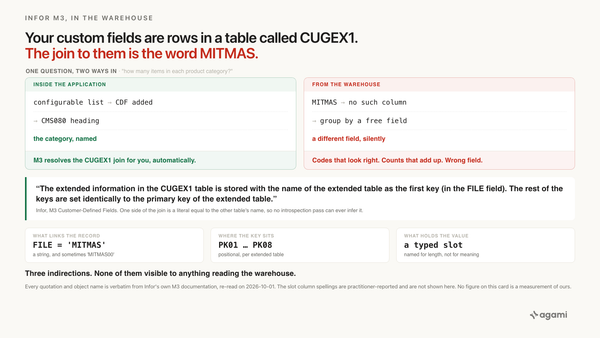
Infor M3 keeps every customer-defined field in CUGEX1, found by matching the extended table's name in a column called FILE. The semantic model declares that join and its mandatory filter.
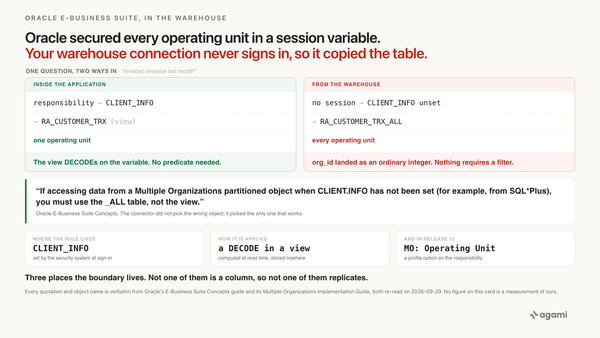
Oracle partitions EBS by operating unit through a view reading a session variable. A warehouse has no session, so every unit lands in one table. The semantic model makes org_id a required dimension.
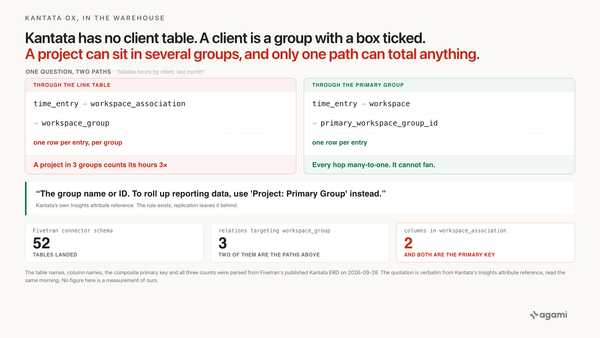
Kantata has no client table. A client is a group with a box ticked, a project can sit in several, and the obvious join counts its hours under each. The semantic model declares the path that totals.