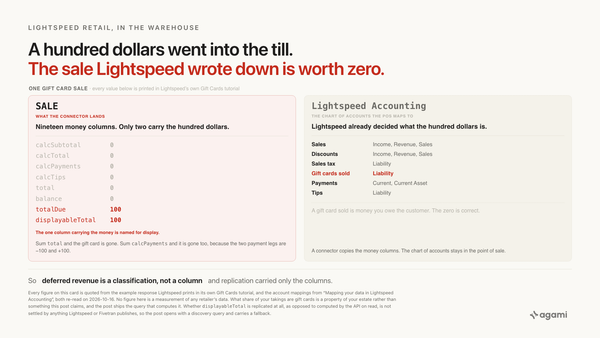
Lightspeed Totals a Gift Card Sale at Zero, Correctly
A customer hands over a hundred dollars for a gift card and Lightspeed writes the sale down as zero, on purpose. The semantic model is where your warehouse learns that is deferred revenue.

A customer hands over a hundred dollars for a gift card and Lightspeed writes the sale down as zero, on purpose. The semantic model is where your warehouse learns that is deferred revenue.
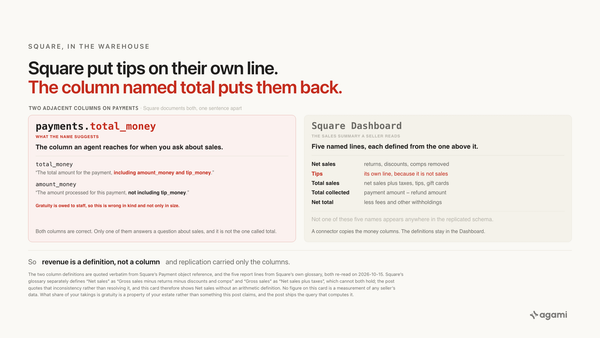
Square's report puts tips on their own line, because tips aren't sales. Replication lands fifteen money columns and none of the definitions. The semantic model is where revenue gets defined.
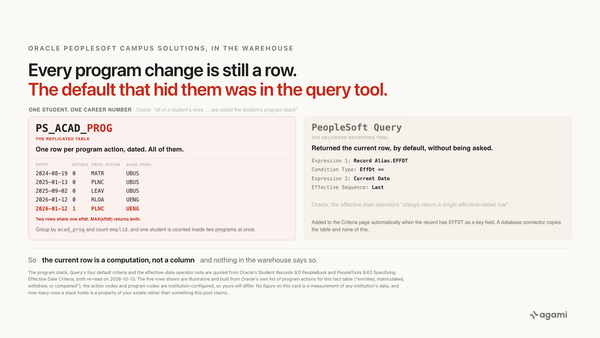
Every program change is still a row in PS_ACAD_PROG, and the tool you reported from dropped them by default. That default doesn't replicate. The semantic model is where the current row gets defined.
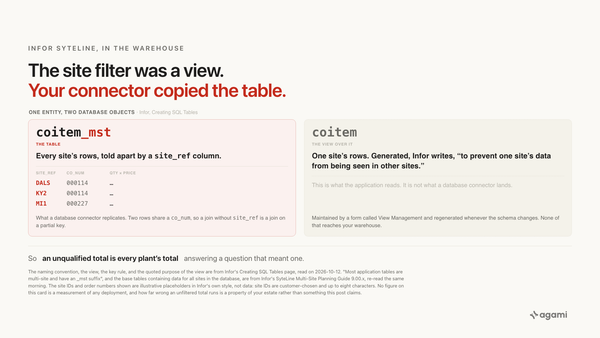
Every SyteLine table holds every site's rows. The object that filtered them to one plant was a SQL view, and your connector copied the table. The semantic model is where the site becomes a key.
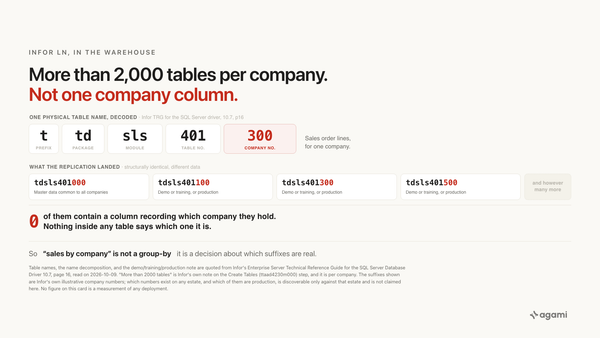
One Infor LN table lands in your warehouse as many tables, one per company, and not one of them has a company column. The semantic model is where the company becomes a column you can group by.
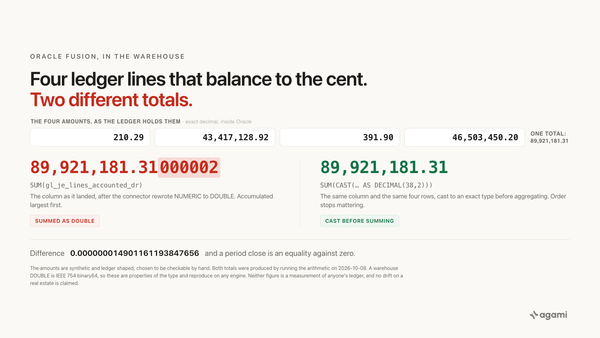
Oracle's ledger balances to the cent because the amounts are decimal. The connector lands them as floating point, and the semantic model is the only place that records they used to be exact.
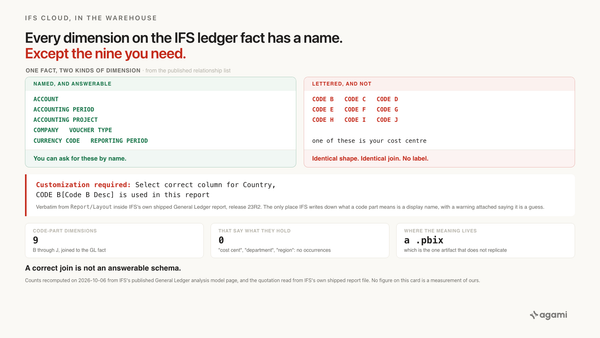
IFS ships nine ledger dimensions named B through J, and never writes down which one is the cost centre. The semantic model is where that finally gets said.
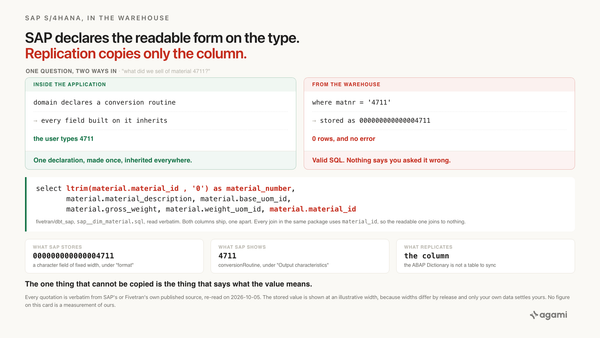
Your SAP warehouse stores material 4711 as 000000000000004711 and ships a trimmed copy beside it. Only one of the two joins to anything. The semantic model declares which.
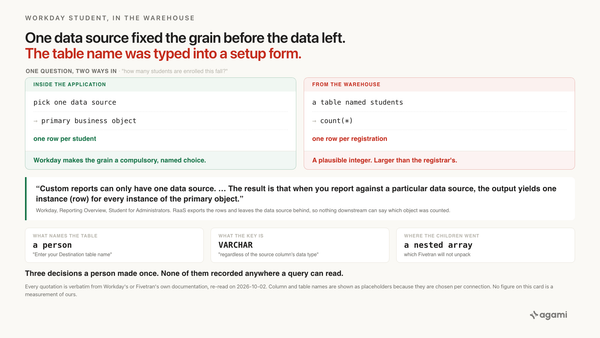
A Workday Student table is one custom report's output, at a grain Workday fixed inside the tenant. The table name was typed by hand. The semantic model is where that grain gets declared.
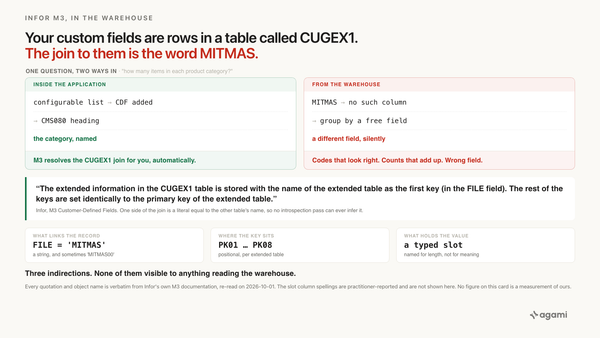
Infor M3 keeps every customer-defined field in CUGEX1, found by matching the extended table's name in a column called FILE. The semantic model declares that join and its mandatory filter.
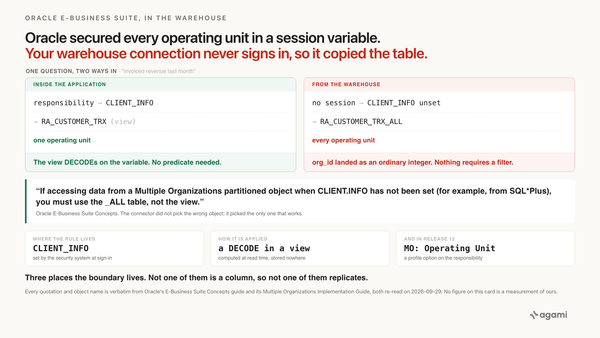
Oracle partitions EBS by operating unit through a view reading a session variable. A warehouse has no session, so every unit lands in one table. The semantic model makes org_id a required dimension.
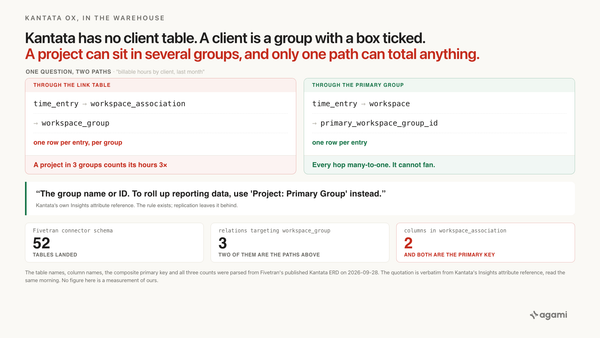
Kantata has no client table. A client is a group with a box ticked, a project can sit in several, and the obvious join counts its hours under each. The semantic model declares the path that totals.
Data Agent
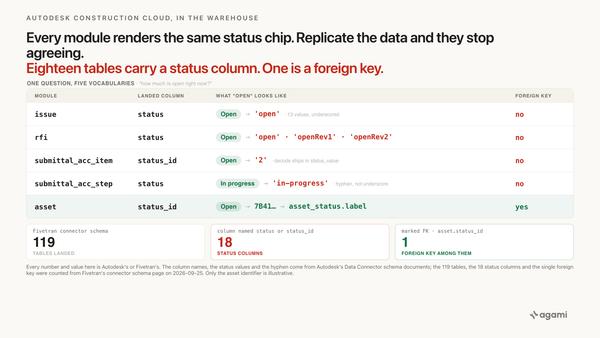
An open issue is the string open. An open submittal item is the string 2. An open asset is a UUID. Five modules, five status vocabularies, and the semantic model is where all five get declared.
Data Agent
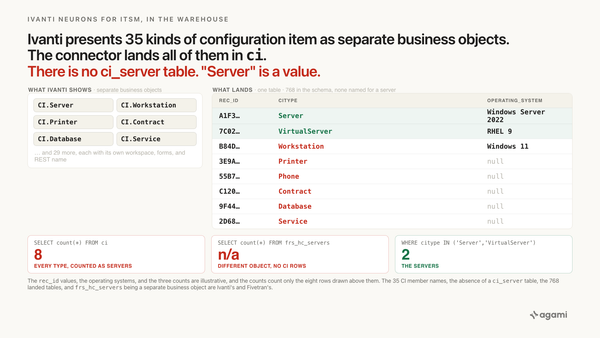
Ivanti shows a server, a printer, and a vendor contract as separate business objects. The warehouse lands all 35 kinds in one ci table where Server is a value. The semantic model makes it the filter.
Data Agent
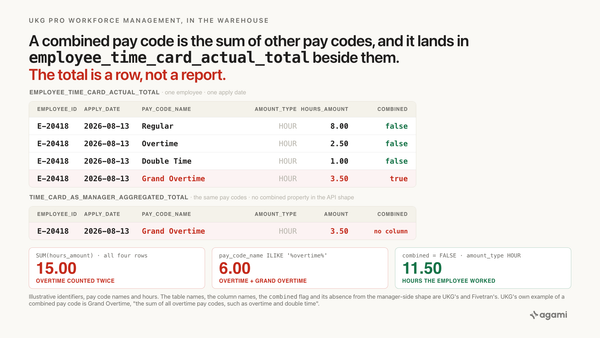
A combined pay code is the total of several pay codes, and it lands as a row beside the rows it sums. Add up the hours column and those hours count twice. The semantic model draws the line once.
Data Agent
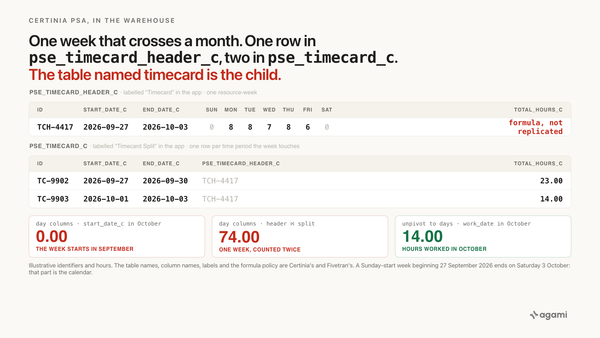
A Certinia timecard is a week, and its total is a formula that never lands. The table the API calls Timecard is the child. The semantic model records which one is the week.
Data Agent
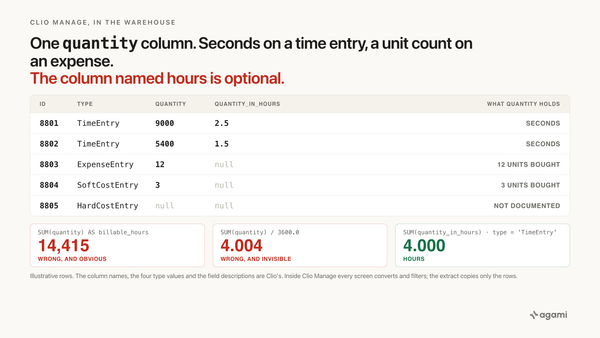
In a replicated Clio activities table, quantity is seconds on a time entry and a unit count on an expense. The semantic model holds the unit and the row filter that every Clio screen applies for you.

Data Agent
A replicated Maximo WORKORDER table holds every task and every closed record beside the work orders. The semantic model holds the filter Work Order Tracking applies.
Data Agent
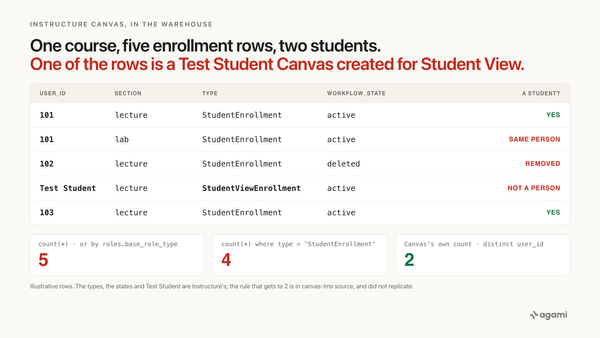
A Canvas Data 2 enrollments row is a user in a section in a role, and one of them is Test Student. The semantic model holds the class size Canvas computes in code.
Data Agent
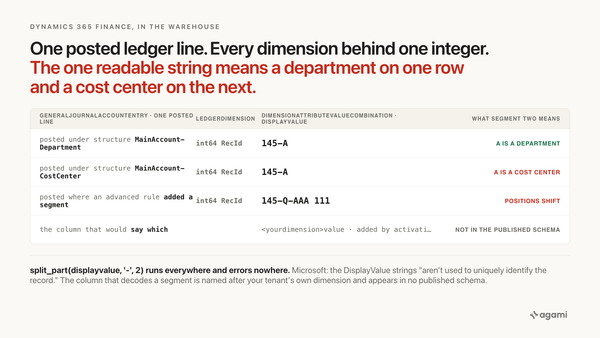
Every financial dimension of a posted Dynamics 365 Finance ledger line sits behind one integer, and the column that decodes it exists only in your tenant. The semantic model names the column.
Data Agent
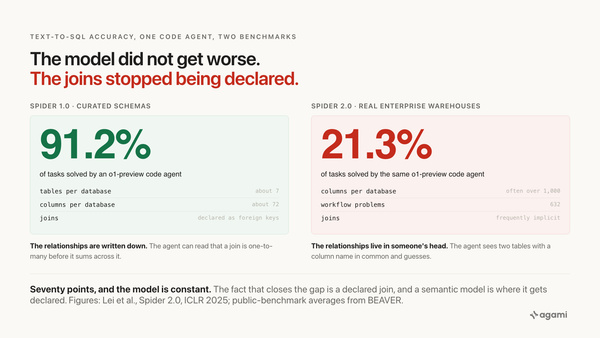
Text-to-SQL scores 91.2% on the benchmark everyone quotes and 21.3% on the one built from enterprise warehouses. The gap is implicit joins, and a semantic model is where they get declared.
Data Agent
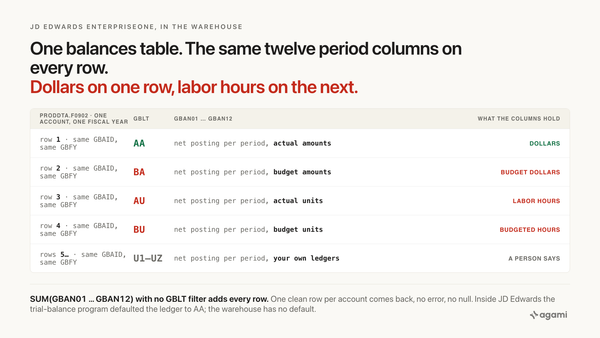
JD Edwards posts dollars, budget dollars, and labor hours into the same F0902 period columns, told apart by a two-letter ledger type. The semantic model names the ledger once, for every query.

Data Agent
Fivetran lands Workday pre-hires beside workers and relatives beside employees, told apart by one column called type. The semantic model declares which rows each question means.
Data Agent
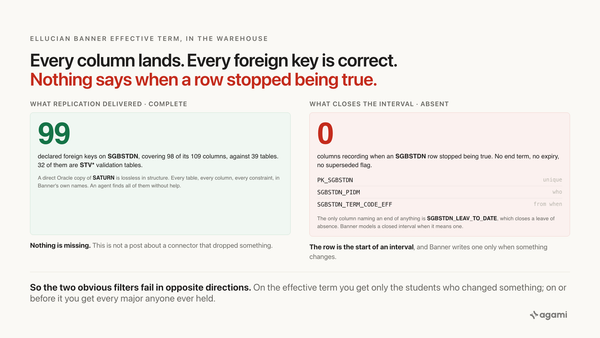
A replicated Banner lands every column and 99 correct foreign keys on the student record, and still cannot say how many students are in each major. The semantic model chooses the in-force row.